
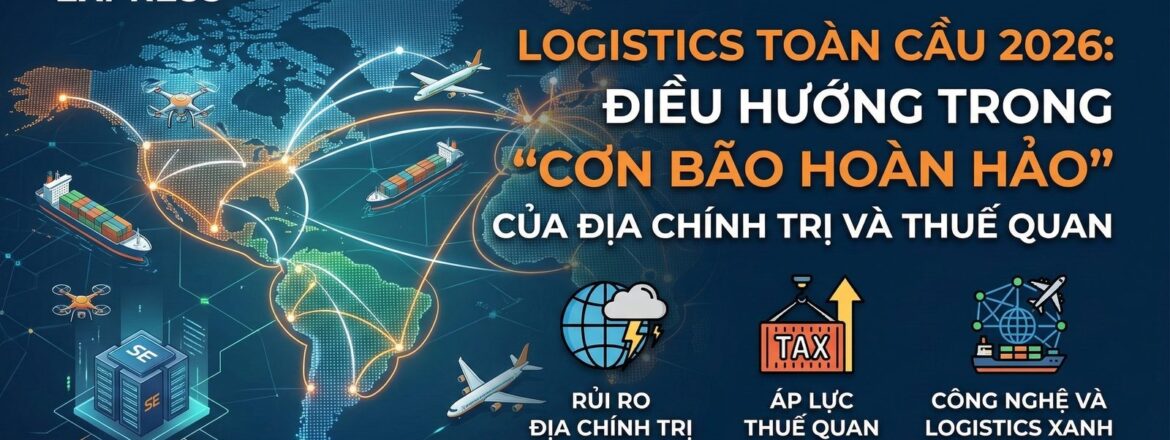
2026 has not started calmly for supply chain managers. With the pandemic behind us, the world now faces a new “perfect storm”: geopolitical conflict at critical straits combined with stricter digital trade barriers and tariffs than ever before.
1. Middle East hotspot: the Strait of Hormuz tightens
Rising tensions in the Middle East in Q1 2026 have put ocean shipping on red alert. The Strait of Hormuz, which carries almost 20% of the world’s oil and liquefied natural gas (LNG), has become the centre of the instability.
- Broken routes: Major carriers (Maersk, MSC, Hapag-Lloyd) have officially cancelled plans to return to the Suez Canal. Sailing around the Cape of Good Hope is now the only option, adding 10–14 days to transit times.
- Rising costs: It is not just fuel. War risk insurance premiums have jumped from 25% to 50% in just three weeks.
2. Tariff pressure and shifting trade flows
New US tariffs on goods from major manufacturing markets are causing logistics flows to “migrate”.
Table: Impact of tariffs and environmental fees in 2026
| Factor | Current situation | Impact on logistics |
|---|---|---|
| US tariffs | New duties on electronics and semiconductors | Higher demand for warehousing in transshipment countries (Vietnam, Mexico). |
| Carbon fees (EU ETS) | 100% of emissions covered from January 1, 2026 | Freight costs to Europe up by an average of USD 150–200 per TEU. |
| Vessel capacity | Fleet growth of 4% | Eases pressure on base rates, but the gain is wiped out by surcharges. |
Businesses rerouting goods through “transshipment hubs” such as Vietnam or Mexico to reduce tariffs are causing local congestion at deep-water ports and in bonded warehouses.
3. Green and digital logistics: from trend to requirement
In 2026, logistics companies no longer see AI or emissions reduction as optional extras.
- Digital twins: Large shippers now expect real-time visibility down to each individual container. Using AI to predict disruption risks and automatically trigger backup routes has cut losses from port congestion by 20%.
- Air cargo as a lifeline: With ocean freight exposed to geopolitical risk, demand for air freight for high-value goods (AI components, processors) in Southeast Asia has surged by 45%.
Soleil Transportation’s analysis
The 2026 logistics market is shifting from cost optimisation to resilience optimisation.
“We are living in an era where logistics cost is no longer a fixed number. It is a variable that depends on how fast technology adapts and how well geopolitical risk can be predicted.”
Short-term outlook:
- Freight rates: Asia–US and Asia–Europe lanes will stay high because of fuel surcharges and carbon fees.
- Infrastructure: Southeast Asian ports will keep attracting heavy investment to handle transshipment cargo that avoids tariffs.
Want an update on this month’s freight rate changes on key lanes to the US and the EU? Contact Soleil Transportation on +1 888-998-5199 or at info@soleiltransportation.com.